Procurement and Logistics Guide
Toy Wholesale Sourcing: How to Tell If a Category Will Become Dead Stock?
Veteran toy wholesaler shares real-world methods for judging category demand. Reduce inventory risk, improve turnover, and stop losing money to dead stock.
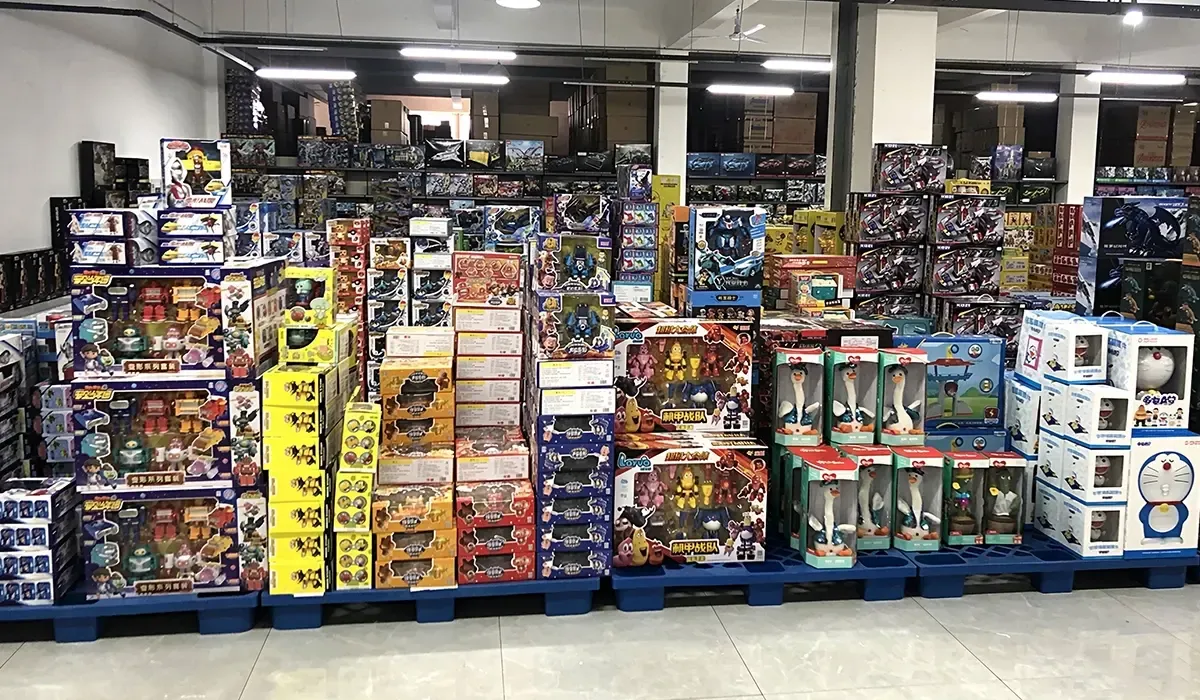
If you've been in toy wholesale for more than a few years, you know the worst feeling in this business: walking into your warehouse and seeing rows of pallets gathering dust. Dead stock doesn't just take up space—it ties up your cash flow, eats into margins, and forces painful clearance sales that can drag down your entire brand.
After more than 15 years sourcing and wholesaling toys across global markets, I've seen too many good businesses get hurt by one bad sourcing call. The good news is: most slow-moving categories show clear warning signs before you place the order. You don't need a crystal ball—you just need a systematic way to evaluate risk.
This guide breaks down five practical, field-tested rules I use every day to judge whether a toy category will sell through or sit on the shelf.
1. Check the Product Life Cycle: Stay Away From Short-Lived Fad Toys
The first and most important question to ask is: how long is this product's sales window going to last?
How long do viral toy fads actually last?
Viral internet sensations—think blind box crazes, squishy fidget toys, and novelty items that blow up on TikTok—have extremely short life cycles. Industry data shows the average toy fad lasts only about 6–8 months from launch to markdown, and many collapse even faster.
Take Pop Mart's viral characters as an example. Each hit IP enjoys a hype cycle of roughly 2–3 years at most, after which demand drops off sharply as collectors move to the next big thing. Back in the 1970s, the famous Pet Rock fad peaked and faded within a single holiday season—about six months total.
If you jump on a viral trend late and place a large bulk order, you will almost certainly get stuck with inventory when the hype dies.
Who can safely trade fad toys?
This doesn't mean you can never touch viral products. If you have extremely fast reaction times, tight supply chains, and a sales channel that can turn inventory in 90 days or less, you can capture the upside. But for most wholesalers who serve traditional retail channels with longer lead times, fad toys are simply not worth the risk.
Rule of thumb: If a product's main selling point is “everyone is talking about it right now” rather than real play value, treat it as high-risk and keep orders small.
2. Evaluate Audience Breadth: Niche Categories Carry Higher Risk
The second factor is how broad the product's target audience is. All else equal, the narrower the audience, the higher the chance of dead stock.
Why niche IP and narrow age-range toys get stuck easier
Toys built around a very specific niche IP, a hyper-targeted age group, or a subcultural hobby have a hard ceiling on demand. Once every fan in your market has bought one, sales drop off a cliff.
For example, a toy tied to a single children's show that only airs in one country will always be riskier than a generic building block set that appeals to all kids aged 3–8 everywhere. Niche products can have great margins when they’re hot, but they have no fallback demand when trends shift.
Broad-base evergreen toys: slower but steady
Basic, broad-appeal toys may not give you explosive viral sales, but they sell consistently year after year. Think classic building blocks, basic plush animals, simple puzzle toys, and standard outdoor play equipment.
These products don't go viral. They also don't suddenly die. Even if sales are slower month to month, you can be confident they will eventually sell through. For wholesalers, predictable steady turnover is often more valuable than occasional big hits.
Rule of thumb: The more specific and narrow the target audience, the more conservative your order quantity should be.
3. Analyze Repurchase Rate: Consumables & Refills Reduce Stock Risk
The third dimension to evaluate is repeat purchase rate. Products that customers buy again and again are inherently safer than one-and-done purchases.
High-repeat categories that keep selling
Consumable toys and accessory refill packs have built-in repeat demand. Think bubble solution, art supplies, clay and dough refills, building brick accessory packs, and replacement parts for activity toys.
Customers don't buy these once and be done. They run out, lose pieces, or need more to keep playing. This creates steady, predictable reorder flow for retailers—and for you as a wholesaler. Even if sales volume isn't enormous, the constant turnover means you rarely get stuck with long-term dead stock.
Low-repeat durable toys: higher inventory risk
On the other end of the spectrum are large durable toys that a child will own once and play with for years. Big ride-on cars, large play structures, and premium dollhouses fall into this category.
These products often have higher unit value and higher margins, but they also carry much higher inventory risk. A customer only buys one. If you over-order, you can't rely on repeat purchases to clear the stock.
Rule of thumb: Prioritize categories with natural repeat demand. They are the safest foundation of your product mix.
4. Mind Seasonality: Control Order Quantities for Holiday & Seasonal Toys
Seasonal and holiday-themed toys are some of the highest-risk items in wholesale, because their selling window closes completely on a fixed date.
Why seasonal toys turn into dead stock overnight
Christmas toys, summer beach toys, Halloween costumes, and Easter products all have one thing in common: once the holiday passes, demand drops to nearly zero. A Christmas-themed plush that sells like crazy in December becomes almost unsellable on January 2nd.
Many buyers get caught up in peak-season hype and over-order to avoid stockouts. But the cost of a few lost sales during the peak is almost always smaller than the loss from leftover stock that sits in your warehouse for a full year—or gets sold off at 50%+ discount.
The safer approach: less quantity, faster turnover
The smart strategy for seasonal goods is: under-order on purpose. Accept that you may sell out a week early and leave some money on the table. That is almost always better than ending up with excess inventory that destroys your margin.
If you work with a supplier that has fast production lead times and can support reorders during the season, you can start conservative and restock as you see sales data. This is far safer than betting on a forecast months in advance.
Rule of thumb: For any product with a clear seasonal expiration date, err on the side of ordering less. You can reorder; you can’t un-order.
5. The Safest Strategy: Start With Small Batch Testing
Finally, there is one method that beats every forecasting model and every industry rule: test small first.
Why small-batch testing beats forecast guessing
No matter how much research you do, how many trends you analyze, or how confident you feel, you will sometimes be wrong. Market taste is unpredictable. The only reliable way to know if a product will sell is to put it in front of actual customers.
Order a small batch first—even if the unit cost is higher. Let it sell through your channels for a few weeks. Watch the sell-through rate. If it moves quickly and reorders come in, then scale up with confidence. If it sits, you only take a small loss instead of a warehouse full of dead stock.
Balancing unit cost vs. inventory risk
Many buyers resist small-batch orders because the per-unit price is higher. But you have to calculate the real cost: a 10% higher unit cost on a small test order is nothing compared to writing off 50% of a large bulk order as clearance.
Working with a China toy supplier that offers flexible low MOQ (minimum order quantity) lets you test more categories with less risk, and scale up only the winners.
Rule of thumb: When in doubt, test small. The cost of being wrong is much lower.
How a Flexible Toy Supplier Reduces Your Inventory Risk
None of these strategies work well if your supplier forces you into huge minimum orders and long lead times. A good sourcing partner doesn't just sell you toys—they help you manage inventory risk.
At Inluv toys, we specialize in supporting small to mid-sized toy wholesalers with flexible MOQ policies, fast reorder turnaround, and honest market advice. We won’t push you to over-order just to hit our production targets. We’d rather grow with you by helping you build a profitable, sustainable product mix.
With OEM/ODM capabilities, a broad catalog of evergreen toy categories, and small-batch production options, we help you test new ideas safely and scale winners fast.
Final Thoughts: Build a Low-Risk, High-Turnover Product Mix
Great toy wholesalers aren't the ones who guess every trend correctly. They’re the ones who structure their product mix so that one bad call doesn’t sink their business.
Build your foundation around broad-audience, high-repeat, evergreen products. Use small test orders to explore new trends and niche categories. Keep seasonal orders tight and work with suppliers who can reorder fast.
If you evaluate every new category through these five lenses—life cycle, audience breadth, repurchase rate, seasonality, and testability—you will dramatically cut your dead stock risk and build a much more profitable wholesale business.
Frequently Asked Questions
Q: How long does a typical viral toy fad last?
A: Most viral toy fads last only 6–8 months from launch to market saturation. Some novelty crazes peak and decline within a single holiday season. Only a small number of IP-driven products last 2–3 years.
Q: What toy categories have the lowest risk of dead stock?
A: Broad-audience evergreen categories carry the lowest risk: basic building blocks, classic plush, simple puzzles, general outdoor toys, and other products with wide age appeal and long-lasting play value.
Q: Which toys have the highest repurchase rate for wholesalers?
A: Consumable and refillable toys have the highest repeat purchase rates, including bubble solution, play dough refills, art supplies, building brick accessory packs, and replacement parts for activity toys.
Q: How much should I order of seasonal / holiday toys?
A: Start with a conservative quantity, typically 70–80% of your forecasted demand. Plan to reorder mid-season if sales are strong. It is better to sell out early than to be stuck with dead stock after the holiday.
Q: What is the best way to test a new toy category?
A: The most reliable method is small-batch test selling. Place a small initial order, sell through your actual channels for 2–4 weeks, and measure real sell-through rate before committing to larger volumes.
Data source official website:
- Toycycle – Toy Industry Statistics & Lifecycle Dataweb:https://toycycle.co/pages/toy-industry-statistics
- Otinga Marketing – Pop Mart Viral Product Case Studyweb:https://otingamarketing.com/case-study-5-labubu-popmart-viral-marketing-case-study-otingamarketing/
- Shopify – Seasonal Inventory Management Guideweb:https://www.shopify.com/pk/blog/seasonal-inventory
- Wholesale Suite – Effective Inventory Strategies for Wholesalersweb:https://wholesalesuiteplugin.com/effective-inventory-management-strategies/
Website: www.inluvtoys.com
Email: henry@inluvtoys.com
Phone / WhatsApp / WeChat: +86-13411918746