Product Knowledge
The Future of Traditional Toys: Trends, Challenges & B2B Sourcing Opportunities
Traditional toys are not dead—see 2026 market trends, sourcing challenges, and global B2B opportunities, plus the compliance rules buyers must plan for.
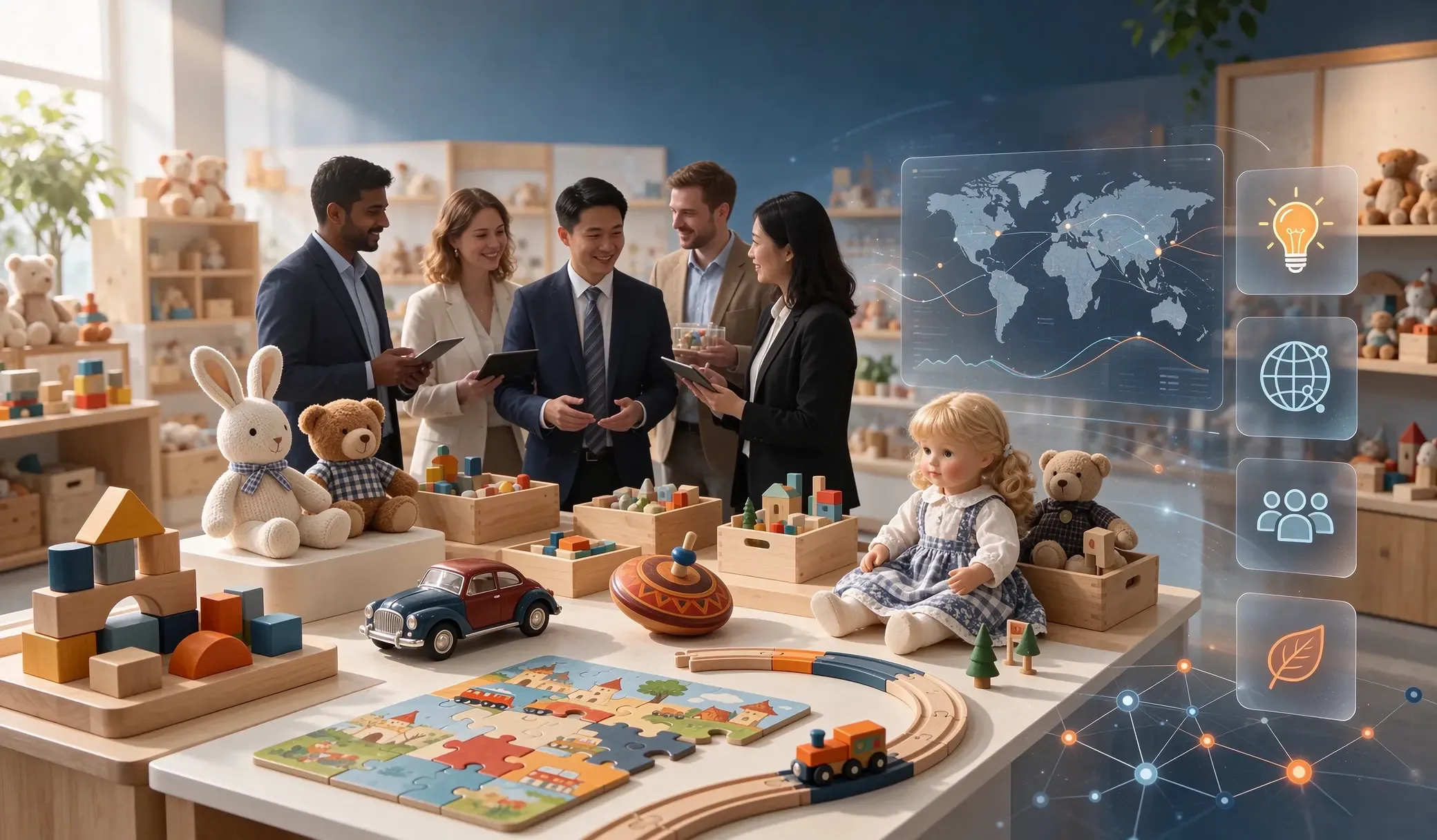
Traditional toys are not simply being replaced by screens and artificial intelligence. The market is evolving: buyers balance familiar play—blocks, puzzles, dolls, vehicles, pretend play—against growing demand for creativity, education, interaction, and differentiation. For wholesalers, importers, distributors, and private-label brands, the real question is which products keep lasting demand while you control sourcing cost and inventory risk.
1. The Current State of the Traditional Toy Market
Traditional Toys Face a Changing Competitive LandscapeTraditional toys compete with digital entertainment, licensed products, and interactive electronics. But the data does not say they are disappearing. According to Circana, U.S. toy retail sales rose about 6% in 2025—a figure spanning the whole toy market, so individual categories still need their own read. For buyers, performance turns on target audience, price point, design, and channel. A familiar product with clear value stays relevant; an undifferentiated one gets crushed on price.
Why Traditional Toys Still Have Market PotentialTraditional toys carry built-in strengths: hands-on play (build, assemble, role-play), accessible use (many need no battery, connectivity, or software), flexible open-ended experiences, and broad category diversity. None of that guarantees sales—but it gives a base to build a competitive assortment on, if you verify quality, pricing, and local demand.
2. What Will Shape the Future of Traditional Toys?
AI Integration—and Where It Actually HelpsAI brings conversational toys, personalized responses, and interactive learning. Some merge these with plush or robot formats. But AI is not for every toy. Before sourcing an AI-enabled product, ask whether the feature solves a real need, what it adds to retail price, and what software support, reliability, and after-sales it requires. Connected toys that collect data from children also trigger privacy law—in the U.S., COPPA applies to services directed to under-13s. Verify obligations before importing.
Product Innovation and Differentiation Without TechTraditional toys evolve without chips: distinctive design, new play mechanics, themed collections, better packaging, customization. For private-label buyers, OEM/ODM supports logo, packaging, and product changes—but deeper customization means tooling, higher MOQ, added testing, and longer lead times. The goal is a clear reason to choose one product over a look-alike, not maximum complexity.
Educational and Interactive PlayEducational toys, puzzles, construction sets, and creative activities serve specific customer groups and can be segmented by age, learning activity, channel, and price. But "educational" must be backed by the actual experience—verify age suitability, instructions, durability, and any developmental claim rather than trusting the label.
3. Challenges and Growth Opportunities
Challenge | Buyer-side mitigation |
|---|---|
Product homogeneity / price war | Differentiate via design, packaging, theme, or private label |
Trend-driven demand drops before sell-through | Test with samples, avoid heavy pre-commitment to fads |
Inventory risk | Balance assortment; mix staples with selective new items |
Hidden landed cost (freight, duty, testing) | Evaluate total cost, not unit price alone |
Compliance gaps at destination | Confirm applicable standards before sampling |
Product Homogeneity, Pricing, and Inventory Risk. When many suppliers offer the same item, price becomes the battleground and margins shrink. Beyond unit price, weigh MOQ and replenishment flexibility, freight/duty/packaging landed cost, testing and compliance expense, expected retail margin, and repeat-order potential. A balanced assortment reduces dependence on any single product or short-lived trend.
Opportunities Through Product Development. Innovation works best against a clear market need. Define the target market, benchmark existing products, request samples, confirm compliance, and agree specifications before production. Sales feedback then guides replenishment and next development—exploring opportunity while keeping sourcing and inventory risk contained.
4. What This Means for Buyers Sourcing Toys Globally
Why Source From Established Toy Manufacturing Clusters. Mature clusters offer broad category coverage, competition among suppliers, and customization capability—helping international buyers compare and build assortments. But don't decide on price alone: product suitability, quality, documentation, lead time, and order flexibility all affect true supplier value.
How to Evaluate a Toy Supplier. Before bulk ordering, verify: product quality (samples—materials, dimensions, function, packaging); testing and compliance (which standards and documents the destination requires); OEM/ODM capability (customization options, cost, MOQ, timeline); order execution (production schedule, inspection, delivery responsibility); and communication (document specs, approved samples, and changes in writing).
How to Build a Balanced Wholesale Assortment. Mix established categories, educational products, interactive items, and selected custom pieces. The right mix follows the target market: an educational retailer prioritizes learning products; a general distributor needs broader coverage; an online seller leans on differentiation and packaging. Test demand with samples before scaling an unproven trend.
5. Compliance: Toys Still Have to Clear the Border
Safety Standards Follow the Market. Traditional toys are regulated everywhere, and the standard depends on destination: EN71 in the EU (via CEN), ASTM F963 in the U.S. (with CPSC oversight), and ISO 8124 as the international baseline many national schemes reference. Confirm the applicable standard—and the test report—before sampling, not at the port.
Connected Toys Add Privacy Rules. If a toy transmits data or connects to a service, privacy law may apply on top of toy safety. COPPA in the U.S. is the classic example for under-13 data collection. Buyers should confirm whether a "smart" traditional toy triggers these rules and who holds compliance responsibility in the supply chain.
6. How InLuv Toys Supports Traditional Toy Sourcing
InLuv Toys focuses on building blocks and STEM construction toys from the Shantou (Chenghai) cluster, with wholesale supply and OEM/ODM support. For traditional-toy buyers, the relevant strengths are consistent quality, sample approval before bulk, and documentation help for destination-market compliance. Whether you are a distributor building a balanced range or a private-label brand developing a differentiated line, the aim is the same: a product that sells as described and clears the border as specified.
Conclusion: Adapting to the Future of Traditional Toys
The future of traditional toys will not be decided by AI alone. Hands-on play, educational products, and familiar categories stay relevant, while thoughtful innovation opens room to differentiate. For wholesalers, importers, and brands, the priority is balancing established demand with carefully evaluated new products—and, when sourcing globally, looking past unit price to suitability, quality, customization, and order execution.
FAQs About the Future of Traditional Toys
Q1: Are traditional toys still popular today?
Yes—in categories like building sets, puzzles, creative toys, and pretend play. Demand varies by market, product, and channel, so evaluate each category on its own rather than treating "traditional" as one block.
Q2: How will AI affect the traditional toy industry?
AI may add conversational and personalized features to selected products, but many traditional toys stay competitive through physical play, creativity, and design—without any chip. Add tech only where it clearly improves the experience.
Q3: What are the main challenges facing traditional toy buyers?
Product similarity and price competition, trend-driven inventory risk, hidden landed costs, and market-specific compliance requirements. A balanced assortment and full-cost view reduce the exposure.
Q4: Why do buyers source toys from established manufacturing clusters?
Clusters offer broad categories, supplier competition, and customization, letting buyers compare and build assortments. The caveat: assess quality, documentation, lead time, and flexibility—not price alone.
Q5: Do traditional toys need safety and privacy compliance to import?Safety, yes—EN71 (EU), ASTM F963 (U.S.), or local equivalents, with test reports. If the toy is connected or collects children's data, privacy rules such as COPPA (U.S.) may also apply. Confirm before sampling.
Website: www.inluvtoys.com
Email: henry@inluvtoys.com
Phone / WhatsApp / WeChat: +86-13411918746