Aug 12, 2026Custom Case
How Long Does It Take to Make Custom Toy Samples?
Custom toy sample timelines explained: 3D design, prototyping, mold trial, and tips to speed up the process. Free assessment inside.
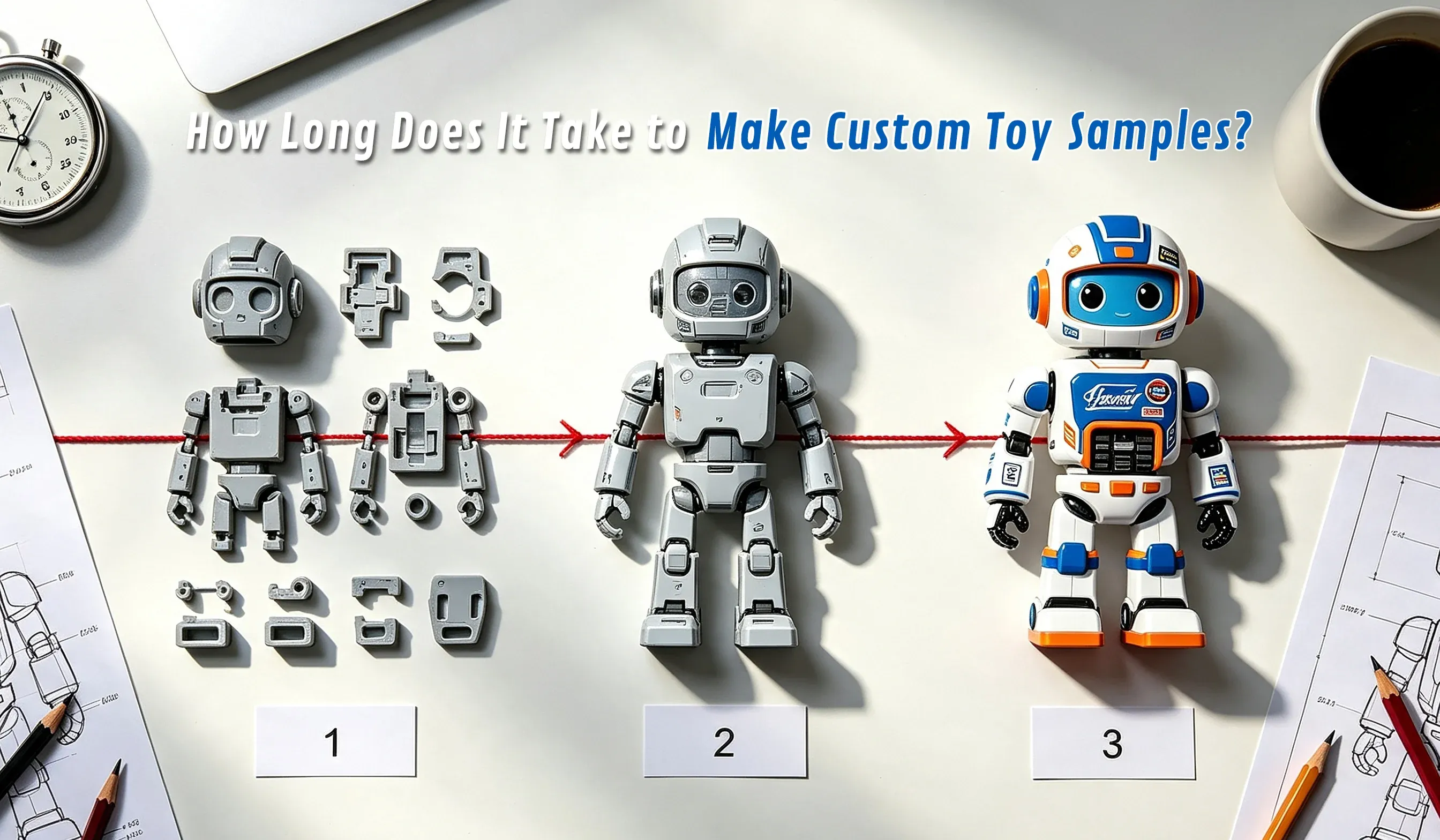
For importers planning a custom toy launch, the sample stage is where excitement meets anxiety. You want to see and approve the product before committing to mold investment, but the timeline often feels unclear. This article breaks down the real sample lead times, the factors that affect them, and how to move faster without cutting corners.
The Short Answer:
A custom plastic toy sample typically takes 15–30 days from design approval to mold trial sample. Simple products can be faster; complex designs with electronics or multi-color decoration can take longer. Here's the exact breakdown.
1. The Standard Sample Timeline
Most custom toy projects follow a predictable sequence. Understanding these stages helps you plan your launch calendar.
- 3D Design and Confirmation: 3–5 days The factory converts your concept into a 3D drawing. You review and approve it before anything is manufactured.
- Prototype Sample (3D Printed or Handmade): 5–7 days A non-functional prototype is made for shape, size, and feel approval. This step catches design flaws before expensive mold-making begins.
- Mold Fabrication: 15–25 days This is the longest single stage. The mold is precision-machined from steel. Complex designs with multiple parts or moving components require more time.
- Mold Trial Sample (T1): 2–3 days after mold completion The first injection-molded sample comes from the actual production mold. This is the sample that truly represents your final product.
Key Insight: Always request the prototype sample before approving the mold. It costs a little extra but saves weeks of rework if the design doesn't feel right in hand.
2. Four Factors That Affect Sample Lead Time
Not every sample takes the same amount of time. These variables explain why two similar-looking toys might have very different sample timelines:
- Product Complexity: A simple solid figure takes less mold time than a toy with joints, moving parts, or multiple components that must be assembled.
- Electronics and Sound: Adding lights, sound modules, or motors introduces circuit design, sourcing, and testing—usually adding 7–10 days to the sample phase.
- Decoration and Painting: Hand-painting, pad printing, or spray painting each require separate setup. Multiple colors mean multiple passes and additional drying time.
- Factory's Current Schedule: A busy production season can extend sample time. Asking about the factory's sample capacity upfront helps set realistic expectations.
3. Three Ways to Speed Up Your Custom Toy Sample
If you're working against a trade show deadline or a retail window, these strategies can compress the timeline:
- Provide Complete Specs from Day One: Missing details on color, material, or packaging cause back-and-forth delays. Prepare a simple spec sheet before you contact the factory.
- Choose a Factory That Makes Molds In-House: Many trading companies outsource mold-making, adding coordination time. Working with a factory that has its own mold workshop saves days and improves communication.
- Approve in Stages, Not All at Once: Instead of waiting for a perfect sample, approve the 3D drawing quickly, then the prototype, then the T1. This keeps the project moving.
Your Next Step: Get a Real Timeline for Your Specific Toy
Generic answers are useful for planning, but your project deserves a precise schedule. The only way to know exactly how long your sample will take is to discuss your design with an experienced factory.
Ready to see your idea become a sample?
Contact InLuv Toys with your concept. We'll provide a free sample timeline assessment, including a stage-by-stage breakdown for your specific product—no obligation. https://www.inluvtoys.com/home#contact-form-dialog
Website: www.inluvtoys.com
Email: henry@inluvtoys.com
Phone / WhatsApp / WeChat: +86-13411918746